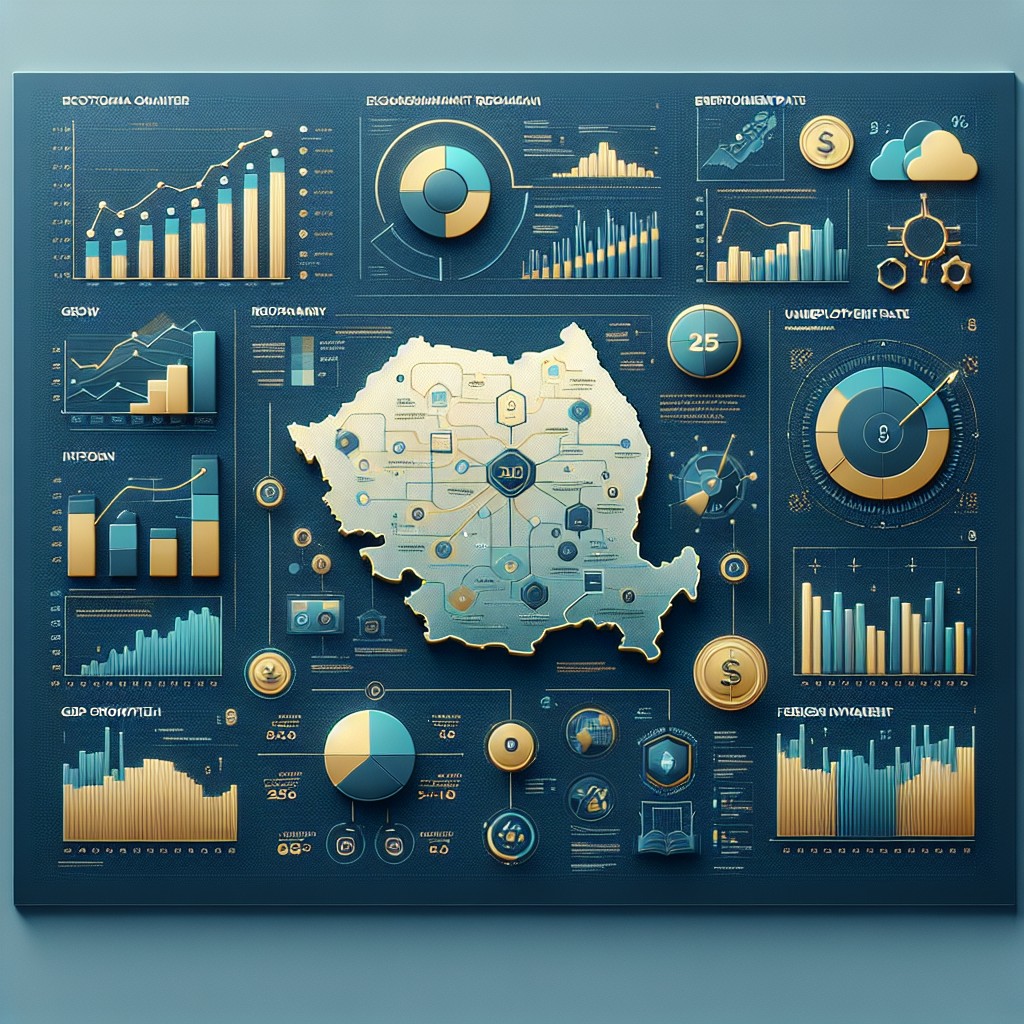
Understanding the economic landscape of Romania requires a close look at a select group of economic indicators. These numbers offer vital insights into the country’s financial health, growth potential, and challenges. For policymakers, investors, and observers, grasping the significance of these economic indicators Romania is crucial in making informed decisions.
Gross Domestic Product (GDP) and its Impact
Gross Domestic Product (GDP) is the most comprehensive indicator of economic activity in Romania. It reflects the total value of goods and services produced over a specific period. Romania’s GDP growth rates have shown resilience over recent years, recovering steadily after global economic disruptions. Tracking GDP changes helps determine whether the economy is expanding or contracting, directly affecting employment rates and income levels. Analysts closely monitor quarterly GDP releases to anticipate shifts in the economic cycle.
Inflation Rate: Measuring Price Stability
The inflation rate in Romania is another key economic indicator that affects both consumers and businesses. Inflation measures the rate at which the general price level for goods and services is rising. A moderate inflation rate suggests healthy demand and economic growth, but excessive inflation can erode purchasing power and destabilize the economy. The National Bank of Romania targets inflation rates to ensure price stability, and recent data shows fluctuating inflation influenced by global commodity prices and supply chain challenges.
Unemployment Rate as a Labor Market Barometer
The unemployment rate in Romania offers insight into the labor market’s condition. It indicates the percentage of the active workforce currently without jobs but actively seeking employment. Lower unemployment rates signal a stronger economy and effective labor market policies. Romania has experienced a relatively low unemployment rate compared to EU averages, although variations exist between urban and rural areas. Monitoring this economic indicator Romania helps in understanding social conditions and economic inclusiveness.
Trade Balance and External Sector Performance
Romania’s trade balance, the difference between exports and imports, is a significant economic indicator highlighting the country’s external sector health. A trade surplus indicates that Romania exports more than it imports, contributing positively to GDP. However, recent figures have shown a trade deficit, influenced by higher import costs and energy demands. This trend calls for a strategic assessment of Romania’s competitiveness and economic dependencies on global markets.
Foreign Direct Investment (FDI) Inflows
Foreign Direct Investment (FDI) is a critical economic indicator Romania uses to gauge international confidence in its market. FDI inflows represent capital investment from foreign entities into Romanian businesses and projects. Sustained FDI supports job creation, technology transfer, and enhances economic growth prospects. Romania’s strategic location and EU membership have attracted significant FDI in recent years, although challenges related to bureaucracy and infrastructure remain obstacles.
Experts and analysts frequently refer to economic indicators Romania provided by international organizations to benchmark performance and guide policy. Similarly, reliable data sources like the economic indicators Romania released by the OECD supply comprehensive analytical tools for a deeper understanding.
In conclusion, the few numbers that truly matter—the GDP growth, inflation rate, unemployment, trade balance, and FDI inflows—jointly offer a nuanced picture of Romania’s economic stability and trajectory. While recent trends indicate cautious optimism, ongoing monitoring of these economic indicators Romania is essential to navigate emerging challenges and opportunities effectively.
Frequently Asked Questions about economic indicators Romania
What are the most important economic indicators Romania uses to assess its economy?
The key economic indicators Romania relies on include GDP growth, inflation rate, unemployment rate, trade balance, and foreign direct investment inflows. These metrics collectively help evaluate the country’s economic performance.
How does inflation affect Romania’s economy according to economic indicators Romania?
Inflation influences purchasing power and cost of living in Romania. Monitoring inflation rates helps ensure price stability, which is critical for sustainable economic growth and consumer confidence.
Why is GDP growth a focus among economic indicators Romania monitors?
GDP growth rate measures overall economic output and vitality. It indicates whether the economy is expanding or contracting, impacting employment and investment decisions in Romania.
What does the unemployment rate reveal about Romania’s economy in economic indicators Romania?
The unemployment rate provides insight into labor market health, showing the proportion of the workforce without jobs but seeking employment. It’s a vital indicator of economic inclusiveness and social wellbeing.
How do trade balance figures influence the assessment of economic indicators Romania?
Trade balance data indicate Romania’s external economic relations, showing whether the country exports more than it imports. A favorable trade balance supports economic growth and stability.